Blog
Best Portable Air Conditioner for RV in 2026: Stay Cool Anywhere Without the Hassle

Summer Shouldn’t Ruin Your Adventure
If you’ve ever spent a hot summer night inside an RV, camper van, truck sleeper, or camping tent, you already know the feeling.
The sun heats your vehicle all day long, turning it into an oven. By bedtime, the temperature is still unbearable. Roof-mounted air conditioners often require shore power, consume a lot of electricity, and aren’t practical for every trip.
Many travelers try battery-powered fans or evaporative coolers, only to realize they simply move warm air around instead of actually cooling the space.
That’s why more outdoor enthusiasts are switching to a small space portable air conditioner that delivers real compressor-based cooling while remaining compact and easy to move.
Whether you’re traveling across the country in an RV, sleeping in a truck cab, relaxing in a tiny cabin, or enjoying a weekend camping trip, choosing the right portable cooling system can completely change your summer experience.
Why More Travelers Are Choosing Portable Cooling Systems
Modern inverter technology can significantly improve energy efficiency compared with conventional cooling systems. According to ENERGY STAR, choosing an energy-efficient air conditioner can reduce electricity consumption while maintaining excellent cooling performance.
Before powering a portable air conditioner with a lithium battery or portable power station, it’s important to calculate the required wattage and runtime based on your appliance’s specifications. The U.S. Department of Energy provides helpful guidance on understanding energy use and efficiency.
Portable cooling technology has improved dramatically over the last few years.
Modern inverter portable air conditioners offer:
- Powerful cooling performance
- Lower energy consumption
- Quiet operation
- Easy transportation
- Simple installation
- No-drain technology on selected models
Unlike traditional window or rooftop air conditioners, today’s portable cooling systems provide flexibility. You can move them from your RV to your garage, from your home office to your campsite, and even use them during emergencies.
This versatility makes them one of the smartest investments for anyone who regularly deals with hot weather.
Where Can You Use a Portable Air Conditioner?
One of the biggest advantages is flexibility.
A high-quality portable AC works in many different environments.
RV Life
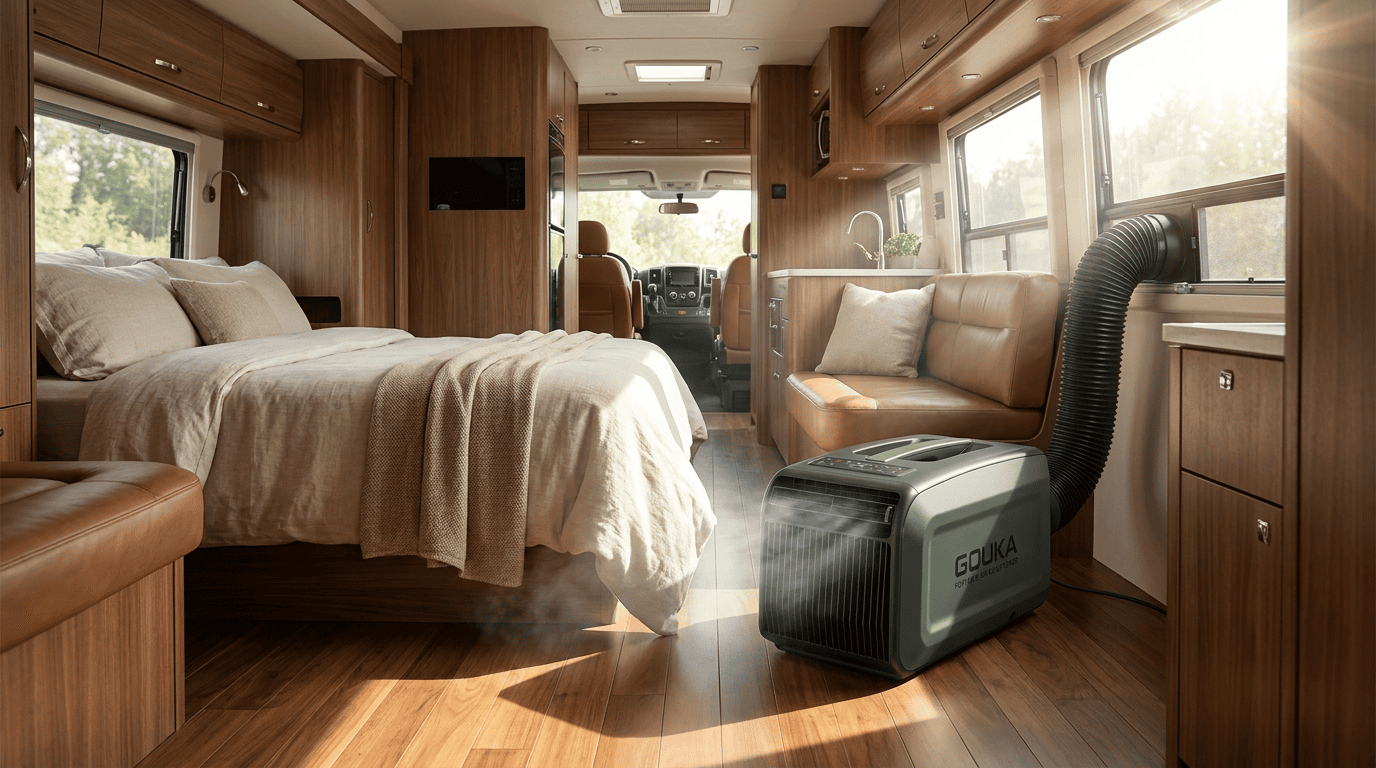
RV owners often struggle with limited electrical capacity and uneven cooling.
A portable air conditioner helps cool the living area quickly without requiring permanent installation.
Camping Tent
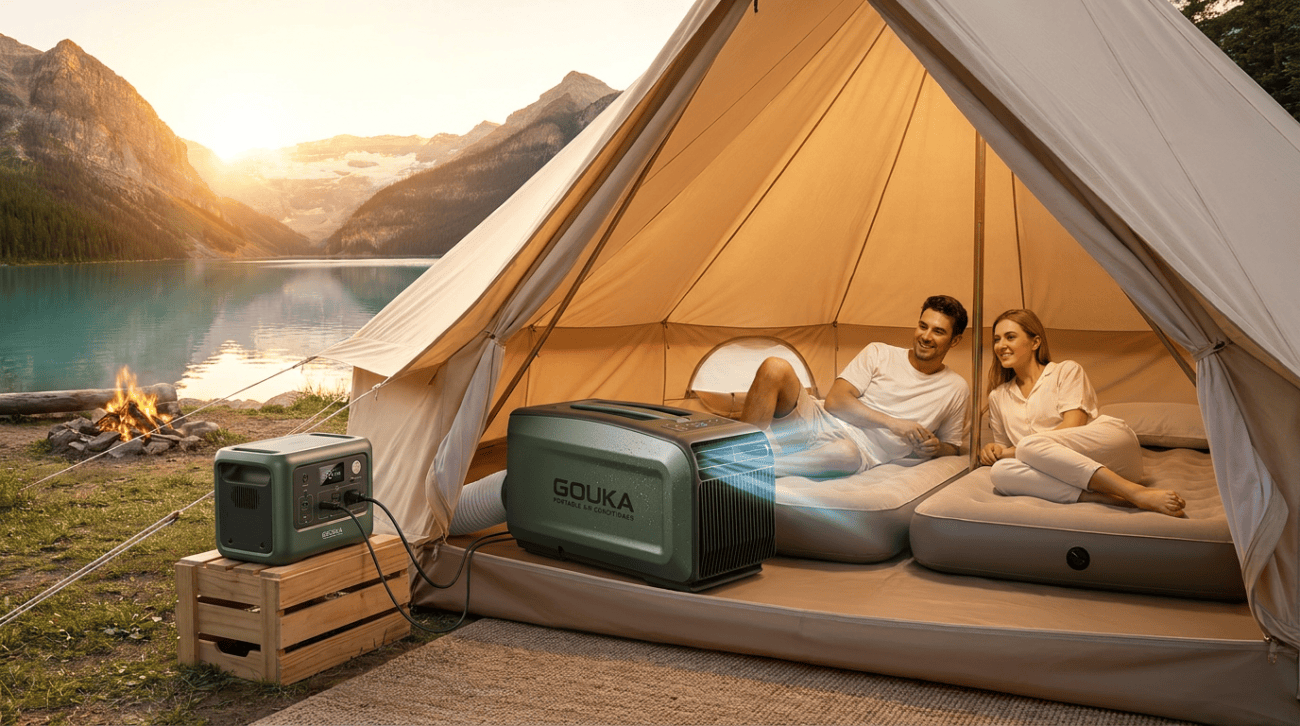
Many campers search for an air con tent solution because traditional fans simply aren’t enough during heat waves.
When paired with proper ventilation and a portable power station, a compressor-based portable AC creates a much more comfortable camping experience.
During extreme summer temperatures, campers should also follow heat safety recommendations, stay hydrated, and ensure adequate ventilation. The National Park Service provides useful outdoor heat safety guidance for campers and hikers.
Truck Sleeper Cab
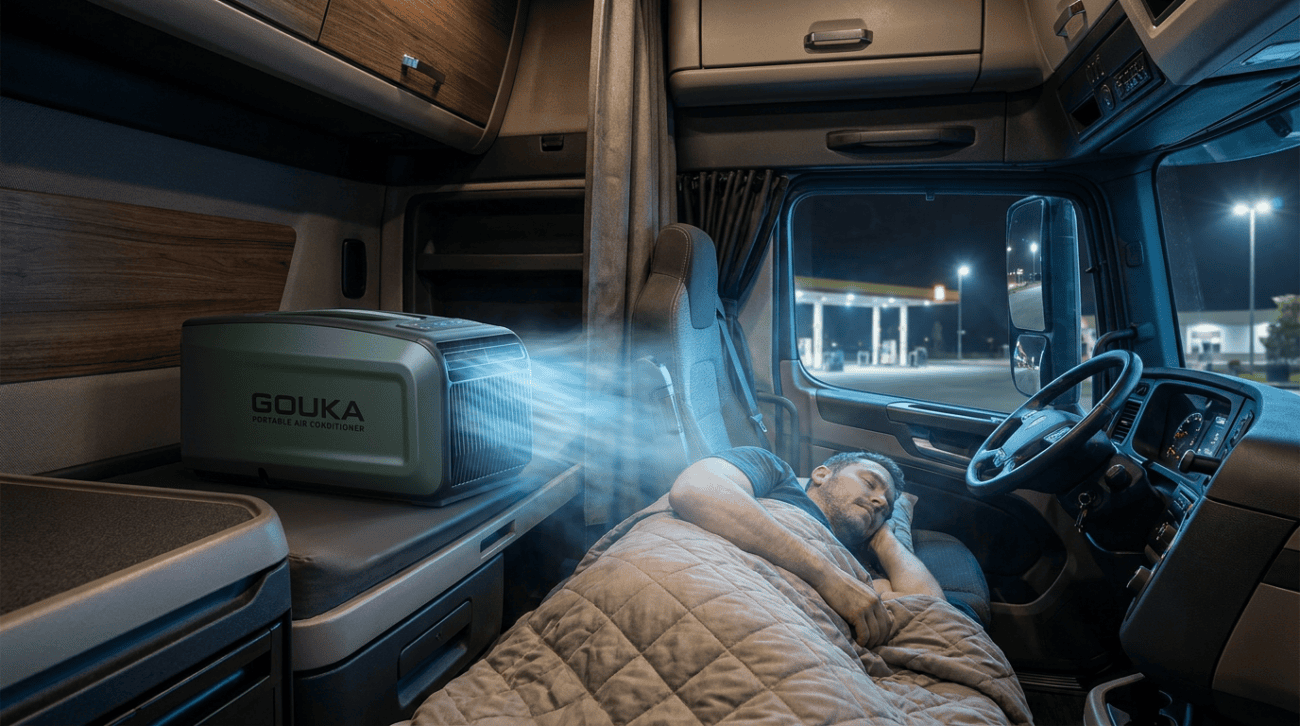
Long-haul drivers know how uncomfortable sleeping inside a parked truck can be during summer.
A compact portable AC unit for car 12V setups—when supported by an inverter or portable power station—offers a far better sleeping environment than relying on idle engine cooling.
Van Life
Van life continues to grow in popularity.
Space is limited, making every appliance important.
A compact portable cooling system saves valuable interior space while delivering strong cooling exactly where it’s needed.
Tiny Homes
Small homes heat up much faster than traditional houses.
A portable inverter AC is often more energy efficient than cooling an entire home with central air conditioning.
What Makes a Great Small Space Portable Air Conditioner?
Not every portable AC is designed for travel.
Here are the features you should prioritize.
Powerful Compressor Cooling
Look for a real compressor rather than evaporative cooling.
Compressor technology actually lowers air temperature instead of simply circulating air.
Energy Efficiency
An inverter compressor adjusts its speed according to cooling demand.
Benefits include:
- Lower electricity bills
- Longer runtime with portable batteries
- Less noise
- Stable temperature
No-Drain Technology
One of the biggest complaints about traditional portable AC units is constantly emptying water tanks.
Modern self-evaporative systems automatically remove most condensation, allowing users to enjoy cooling without frequent maintenance.
Quiet Performance
Whether you’re sleeping in an RV or working remotely inside a camper van, excessive noise quickly becomes frustrating.
Look for units operating around 42–50 dB.
Portability
A comfortable carrying handle, compact footprint, and lightweight design make transportation much easier between different locations.
Portable Air Conditioner With Lithium Battery Compatibility
More travelers now live completely off-grid.
Solar panels and lithium batteries have become standard equipment in many RVs.
Choosing a portable air conditioner with lithium battery compatibility allows you to enjoy cooling without depending on campground hookups.
Combined with a quality portable power station, you gain true freedom to travel almost anywhere.
Portable Cooling System vs Traditional Roof Air Conditioner
| Feature | Portable AC | Roof AC |
|---|---|---|
| Installation | Simple | Professional installation |
| Mobility | Move anywhere | Fixed |
| Energy Consumption | Lower (Inverter) | Higher |
| Maintenance | Easy | More difficult |
| Off-grid Friendly | Yes | Limited |
| Cost | Lower overall | Higher |
For many travelers, portability and flexibility make portable air conditioners the better long-term investment.
How Does It Compare with the Zero Breeze Mark II?
Many outdoor enthusiasts compare newer portable air conditioners with the Zero Breeze Mark II portable air conditioner.
While the Zero Breeze is extremely compact and battery-focused, users looking for stronger cooling capacity, inverter efficiency, and convenient no-drain operation often prefer larger compressor-based models designed for RVs, campers, and small indoor spaces.
The right choice depends on your priorities:
- Maximum portability
- Cooling capacity
- Battery runtime
- Indoor comfort
- Maintenance requirements
Why GOUKA Smart Portable Air Conditioner Stands Out
For RV owners, campers, van lifers, truck drivers, and homeowners, the GOUKA Smart Portable Air Conditioner combines the features people actually need.
Highlights include:
- Powerful 1800W inverter compressor
- Efficient cooling for small spaces
- Self-evaporating no-drain system
- Smart app control
- Quiet sleep mode
- Compact modern design
- Easy installation
- Heating function for year-round comfort
Whether you’re camping beside a lake, relaxing inside an RV, or working in your garage, GOUKA provides reliable cooling without unnecessary complexity.
Frequently Asked Questions
Can a portable air conditioner cool an RV?
Yes. A properly sized compressor portable AC can effectively cool most small and medium RV living spaces.
Can I use a portable AC while camping?
Absolutely. Many campers combine portable air conditioners with portable power stations and solar charging systems.
Does a portable AC require draining?
Modern self-evaporating models require little or no manual draining under normal cooling conditions.
Can lithium batteries power a portable air conditioner?
Yes, if the battery system provides sufficient output and capacity.
Is a portable AC better than a fan?
Yes. Fans only circulate existing air, while compressor air conditioners actively remove heat from the room.
How can I improve cooling efficiency inside an RV?
Besides choosing the right portable air conditioner, parking in shaded areas, improving insulation, closing blinds, and reducing direct sunlight can dramatically improve cooling performance. The Department of Energy’s Home Cooling Tips also recommends reducing indoor heat gain during the hottest hours of the day.
Final Thoughts
Extreme summer heat shouldn’t force you to cut your adventures short.
Whether you’re exploring national parks, traveling across the country in an RV, camping beside a mountain lake, or simply cooling a small apartment, investing in the right small space portable air conditioner provides comfort, flexibility, and peace of mind.
If you’re looking for efficient cooling, quiet operation, inverter technology, and convenient no-drain performance, the GOUKA Smart Portable Air Conditioner is designed to help you stay cool—wherever life takes you.