If you are living on the road, you already know the struggle. Sitting in a vehicle parked under the blistering summer sun feels exactly like being trapped in a sauna. For truckers logging long hours and people living full-time in their rigs, a hot cabin doesn’t just ruin your sleep—it pushes you right to the edge of heat exhaustion.
Trying to beat the heat, a lot of us have fallen into the same traps. We rely on basic fans, buy messy swamp coolers, or pick up a cheap mini air conditioner for cars that barely moves any air. The reality is that those low-power mini units are completely useless against severe cabin heat.
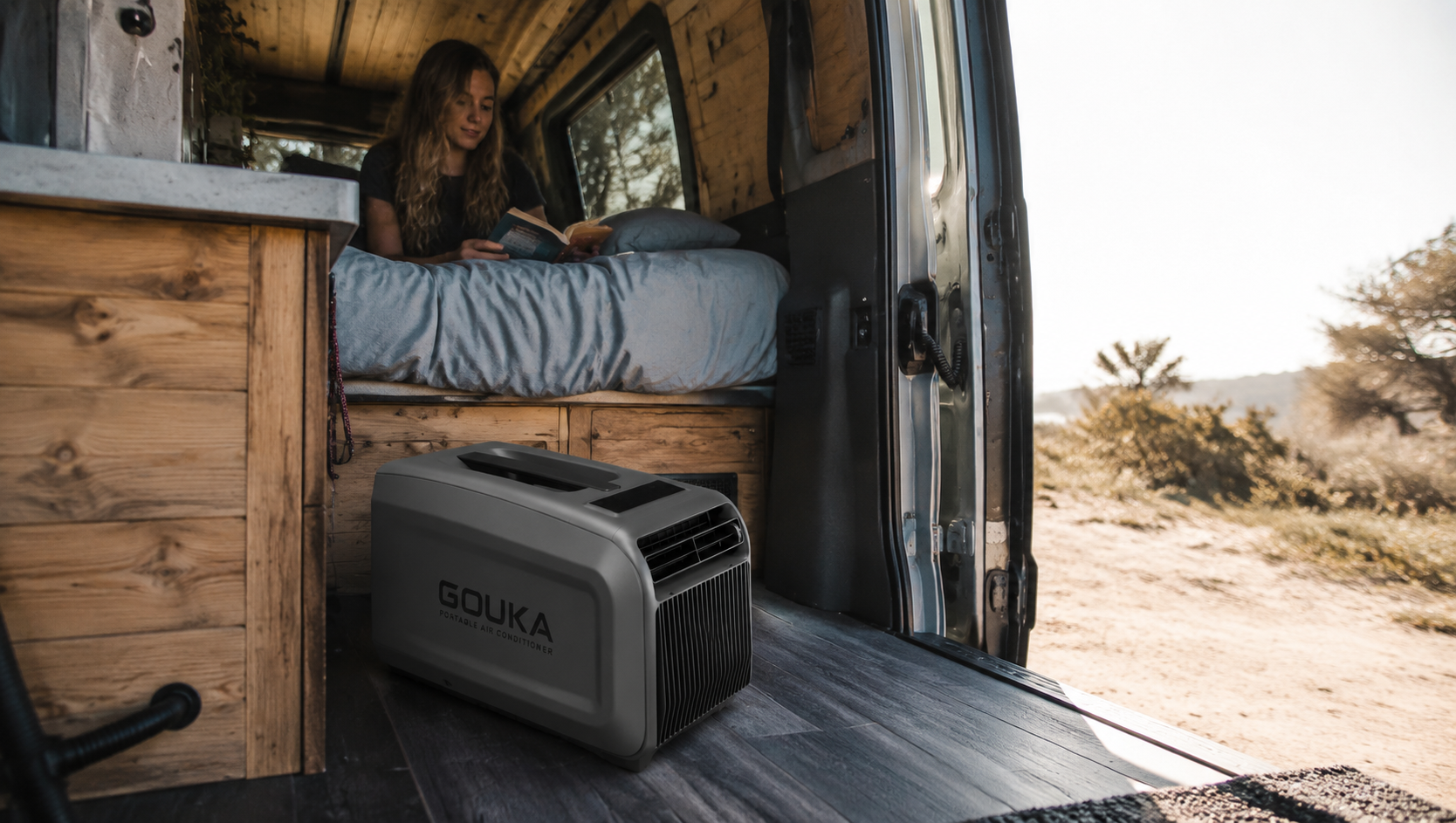
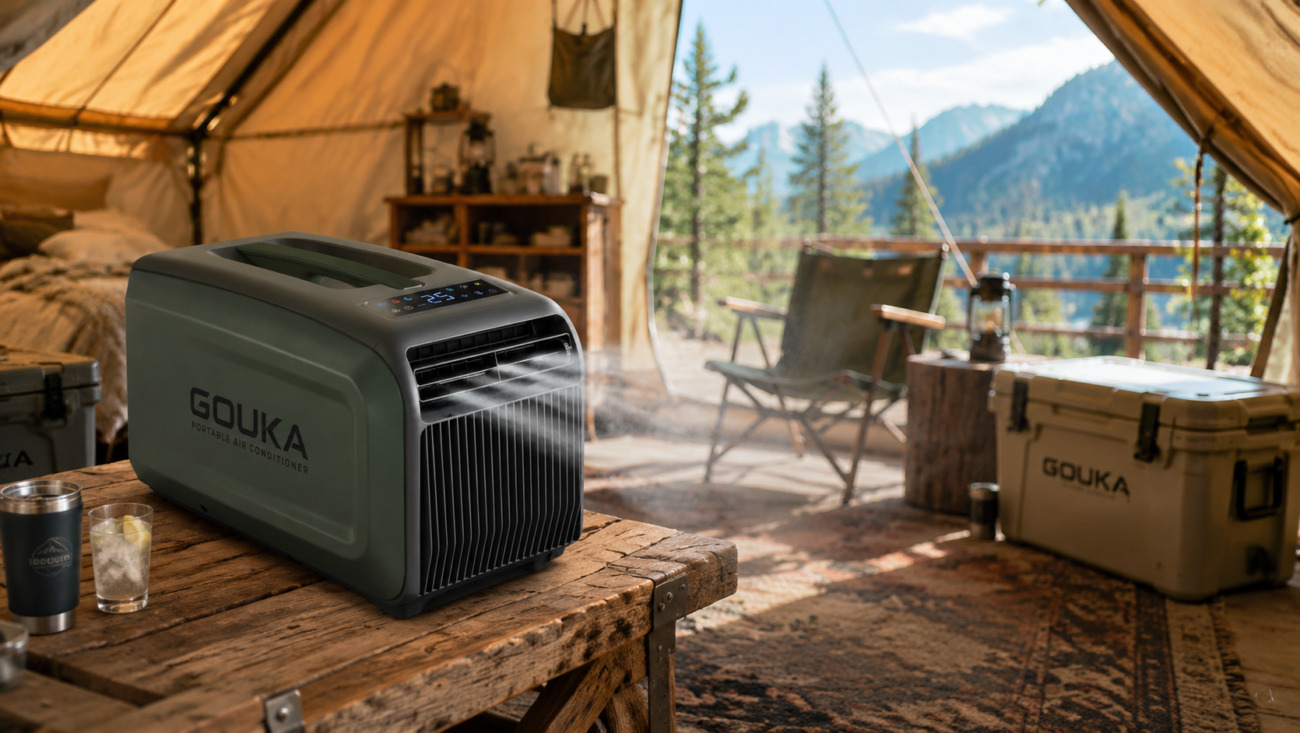
After plenty of trial and error (and a lot of wasted money), I’ve learned exactly what makes a true small space portable air conditioner actually work in tight areas. Whether you are cooling a truck cab, a camper van, or even setting up an air con tent for weekend camping, here are the three non-negotiable features you need.
Even though a truck cab or a tent isn’t a massive space, the cooling demand is incredibly high due to thin insulation and heat-absorbing windows. If your AC’s cooling capacity is too low, it will run at maximum capacity all night. It will be obnoxiously loud and still take forever to actually drop the temperature.
Right now, the sweet spot for surviving direct sunlight is an 1800W unit. But that raises a major question for anyone living off-grid: Can my power setup actually handle that?
This is where variable-frequency compressors change the game. Unlike traditional units that drain massive amounts of current when they kick on, a variable-frequency AC starts at full speed to rapidly drop the temperature. Once it hits your comfort zone, it dials back the power to maintain it. This makes pairing it with your rig’s power bank incredibly efficient (if you haven’t upgraded your electrical system yet, check out our ultimate guide to van lithium battery setups). You won’t wake up sweating at 3 AM to a dead battery.
2. Say Goodbye to the Midnight Spill: The “No-Drain” System
If you’ve used older cooling systems, small space portable air conditioner you know the absolute nightmare of routing drain hoses. Space is tight, and running a drip line outside is a massive headache. If the hose slips, you wake up to a flooded floor and a soaked bed.
The ultimate solution for any modern small space portable air conditioner is auto-evaporation technology. As the AC runs, the internal condenser gets hot enough to directly evaporate the condensation into a gas. This gas is then blown completely out of the vehicle through the exhaust hose.
You never have to empty a water tank again. It’s the perfect plug-and-play setup for cross-country adventures. If you want to dive deeper into how this thermodynamic process works safely in enclosed spaces, the engineering breakdowns over at Energy.gov’s appliance standards are a great external resource to understand the efficiency of modern condensers.
3. Performance Comparisons and Sleep Quality
Living in a small space means you are sleeping inches away from your appliances. When researching online, many people look into popular options like the zero breeze mark ii portable air conditioner because of its compact size. However, when choosing your setup, you always have to weigh overall cooling power against noise levels, footprint, and price.
If a small space portable air conditioner is underpowered for your specific environment, it will constantly cycle on and off loudly. Because a high-quality variable-frequency unit maintains a steady, low-power hum once the space is cooled, the acoustic profile is much smoother. It acts more like consistent white noise rather than a disruptive mechanical clunk. This is absolutely critical for light sleepers parked in noisy truck stops.
The Bottom Line
When you live on the road, the reliability of your gear dictates your daily quality of life. Buying cheap gear that doesn’t work is just throwing money away. Next time you’re looking for a small space portable air conditioner, skip the marketing fluff and carefully check the technical specs. Look for that 1800W sweet spot, a variable-frequency compressor, an auto-evaporation system, and seamless battery compatibility. Making the right investment is the difference between tossing and turning all night, and actually enjoying your summer on the road.